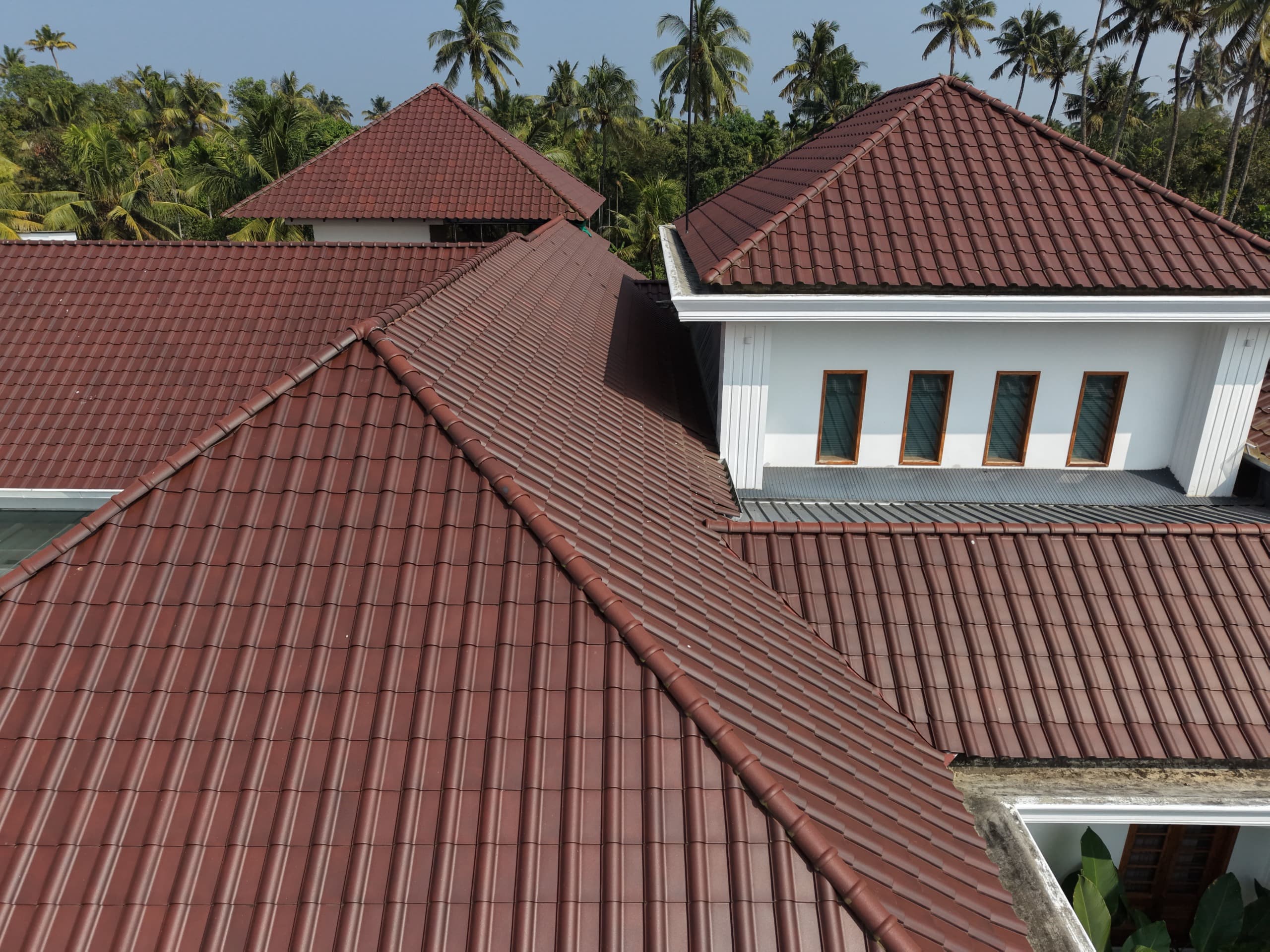
When planning a new house, most people spend time choosing the roof tile colour, exterior paint and overall design. But there is another important thing to consider before starting the roofing work: the roof slope.
In Kerala, sloping roofs are a common feature of many traditional homes and modern villas. They give the house a distinctive appearance and help rainwater flow towards the edges of the roof.
However, choosing the right roof slope is not just about how the house looks. It also depends on the type of roof tiles you select, the roof design, rainwater drainage and the installation method.
If you are planning to use roof tiles for your new home, understanding these points can help you make a better decision with your architect or roofing contractor.
1. What Is Roof Slope?
Roof slope is the angle at which a roof rises from its lowest point towards its highest point. It is also called roof pitch.
You can understand it easily by looking at a traditional Kerala house. The two sides of the roof slope downwards from the top, allowing rainwater to flow towards the eaves.
A roof with a gentle slope looks flatter, while a roof with a steeper slope has a more pronounced triangular appearance.
Roof slope is usually expressed in degrees or as a ratio. The suitable slope depends on the roofing material, roof dimensions, design and local conditions.
For a tiled roof, the slope should be decided based on the installation requirements of the selected tile rather than appearance alone.
2. Why Is Roof Slope Important for Homes in Kerala?
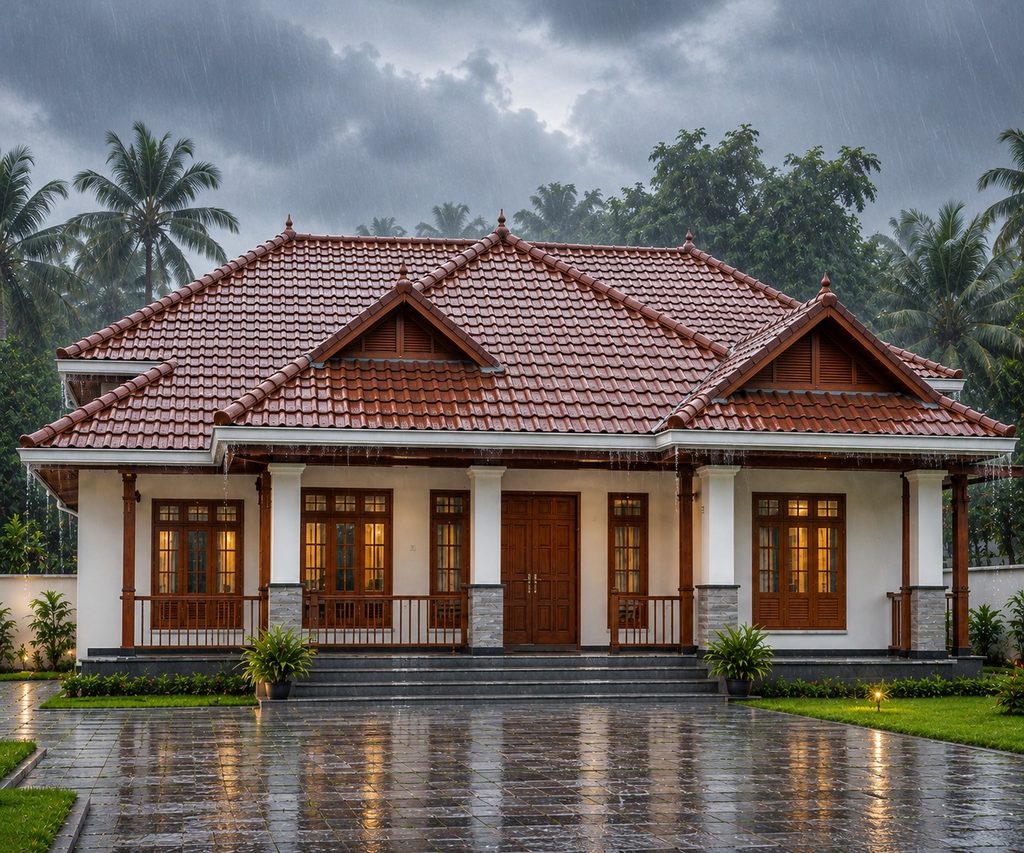
Kerala experiences heavy seasonal rainfall, so roof planning needs proper attention. A suitable roof slope helps rainwater flow off the roof and towards the drainage system. When choosing ceramic roof tiles in Kerala, it is also important to consider the roof slope and the manufacturer’s installation guidelines.
Here are a few reasons why roof slope matters.
Helps rainwater drain away
A properly planned slope helps rainwater flow towards the roof edges. The roof should also have suitable gutters, downpipes and drainage arrangements to carry the water away safely.
Supports proper roof tile installation
Different roofing tiles have different installation requirements. If the roof slope does not suit the selected tile, the roofing system may not perform as intended.
The tile profile, overlap, fixing method and other installation details must be considered along with the slope.
Influences the appearance of the house
Roof slope can change the entire look of a building. A traditional Kerala home may have a prominent sloping roof, while a modern villa may use a different roof profile to match its architectural style.
The right design should complement the house without ignoring practical roofing requirements.
Helps with overall roof planning
The slope affects the roof height, shape and amount of roofing material required. It can also influence the design of the supporting structure.
That is why it is better to finalise the roof design before starting construction rather than making major changes during installation.
3. What Is the Right Roof Slope for a Tiled Roof?
There is no single roof slope that is suitable for every tiled roof.
The required slope depends on the exact tile model, its profile, the roof design and the manufacturer’s installation instructions. The roof’s length, exposure to rain and wind, and other detailing requirements can also affect the final decision.
For example, one tile model may be suitable for a particular roof angle, while another model from the same category may require a different angle.
Before finalising your roof design, check the following:
- The minimum permitted slope for the selected tile.
- The recommended tile overlap and batten spacing.
- The roof dimensions and overall design.
- The drainage arrangements, including gutters and downpipes.
- The fixing method and any additional waterproofing details required.
Do not select a roof angle simply because it is commonly used in another house. Ask your architect or roofing professional to confirm that it is suitable for your selected tile and building.
4. How to Choose a Roof Slope for a Traditional Kerala Home
Traditional Kerala homes often feature sloping roofs with broad eaves and a tiled finish. If you want a similar appearance for your home, consider both the architectural design and the practical requirements of the roofing material.
Consider the shape of the house
The size and shape of the building influence the roof design. A compact house, a large independent home and a villa with multiple roof sections may all need different roofing arrangements.
Discuss the roof shape with your architect before deciding on the final slope.
Choose the roofing tile early
Do not wait until the roof structure is almost complete to select your tiles. Different tile profiles can have different slope requirements.
Choosing the tile early allows the architect and contractor to plan the roof dimensions and supporting structure accordingly.
You can explore the TAPCO roof tile collection to review roofing options that may suit your home’s design.
Plan the roof edges properly
The eaves, ridge, hips and valleys are important parts of a tiled roof. These areas need proper detailing to manage rainwater and reduce the risk of water entering the building.
The roof slope should be considered along with these details rather than treated as a separate design decision.
5. Does a Steeper Roof Always Mean Better Rainwater Drainage?
A steeper roof can help rainwater flow down the surface more quickly. However, this does not mean that the steepest possible roof is always the best option.
The roofing system needs to be designed as a whole.
If the slope is not suitable for the selected tile, water may still enter through poorly detailed joints or other vulnerable areas. Problems can also occur when valleys, ridge sections, flashing or drainage arrangements are not installed correctly.
A well-planned roof should have:
- A slope suitable for the selected roofing tile.
- Correct tile overlap and fixing.
- Properly finished ridge, hip and valley sections.
- Suitable gutters and downpipes.
- Appropriate protection around roof openings and wall junctions.
- Regular inspection and maintenance.
In Kerala, these details deserve special attention because prolonged rainfall can expose weaknesses in roof design and installation.
6. What Should You Check Before Installing Roof Tiles?
Before roofing work begins, make sure the important decisions have been made.
Roof design: Confirm the roof shape, slope, height and dimensions with your architect.
Tile selection: Check the product specifications and installation instructions for the exact tile model.
Supporting structure: Ensure that the roof structure is designed to support the selected roofing materials and expected loads.
Water drainage: Plan how rainwater will move from the roof into gutters, downpipes or other suitable drainage arrangements.
Installation quality: Use an experienced roofing team that understands the selected tile profile and its installation requirements.
Weather protection: Discuss the underlay, flashing and other protective details required for the specific roofing system.
It is also important to make sure that rainwater is managed within the property in accordance with applicable building requirements.
Planning these details in advance can help avoid unnecessary changes during construction.
7. Can You Change the Roof Slope After Construction?
Changing the roof slope after construction may be possible, but it can involve more work than expected.
The existing roof structure, building height, supporting members and roofing material all need to be checked before making changes.
A change in slope may require adjustments to the roof frame, tile layout, drainage arrangements and other structural details. It may also affect the overall appearance of the house.
If you are building a new home, it is usually easier to finalise the roof slope during the design stage.
If you are renovating an existing home, consult a qualified architect or structural engineer before making changes to the roof structure.
8. How to Choose Roof Tiles That Suit Your Roof Design
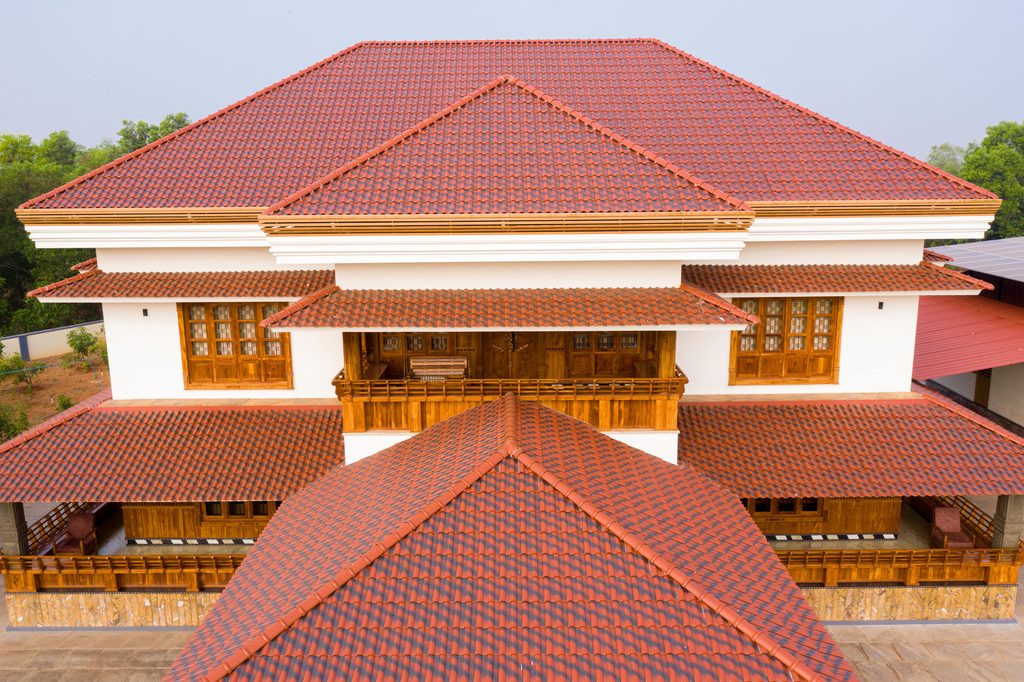
Once the roof design and slope have been planned, the next step is to select a suitable roofing material.
Roof tiles are available in different profiles, colours and finishes. The right choice depends on the appearance you want, the technical requirements of your roof and your budget.
When comparing roof tiles, consider:
- Whether the tile is suitable for your planned roof slope.
- The installation requirements specified by the manufacturer.
- The appearance of the tile on your house design.
- The maintenance requirements of the selected product.
- The availability of suitable accessories and installation support.
For homeowners considering ceramic roofing, explore TAPCO ceramic roof tiles and review the product details before making a decision.
Remember that the tile and roof structure should be planned together. A tile that looks attractive may not be suitable for every roof design.
Frequently Asked Questions
1. What is the best roof slope for a house in Kerala?
There is no single best slope for every house. The correct slope depends on the selected roofing tile, roof dimensions, design and local conditions. Confirm the permitted slope with the manufacturer and your roofing professional.
2. Why are sloping roofs commonly used in Kerala?
Sloping roofs are a familiar feature of Kerala architecture and can help rainwater drain away from the roof surface. Their performance also depends on proper tile installation, roof detailing and drainage arrangements.
3. Can all roof tiles be installed at the same slope?
No. Different roof tile models have different installation requirements. Always check the minimum permitted slope and other specifications for the exact product you plan to use.
4. Is a steeper roof better during the monsoon?
A steeper roof can help rainwater flow away more quickly, but the slope alone does not guarantee good performance. Tile overlap, flashing, fixing, drainage and installation quality are also important.
5. Should I select roof tiles before constructing the roof frame?
It is better to select the roofing tile during the design stage. This allows your architect and contractor to plan the roof slope and supporting structure according to the tile’s requirements.
6. Can I install tiled roofing over an existing terrace?
It may be possible in some cases, but the existing building, proposed supporting structure, additional loads, drainage and applicable building requirements must be assessed by qualified professionals before work begins.
Conclusion
Choosing the right roof slope is an important part of planning a tiled roof for your Kerala home. It affects the appearance of the building, rainwater drainage, tile installation and the overall roof design.
Instead of choosing an angle based only on appearance or another house’s design, first decide which roofing tile you want to use. Then work with your architect and roofing contractor to confirm the suitable slope and installation details.
With proper planning, the right roofing material and careful installation, you can create a roof that complements your home and meets its practical requirements.
Explore the TAPCO roof tile collection to learn more about roofing options for your home.