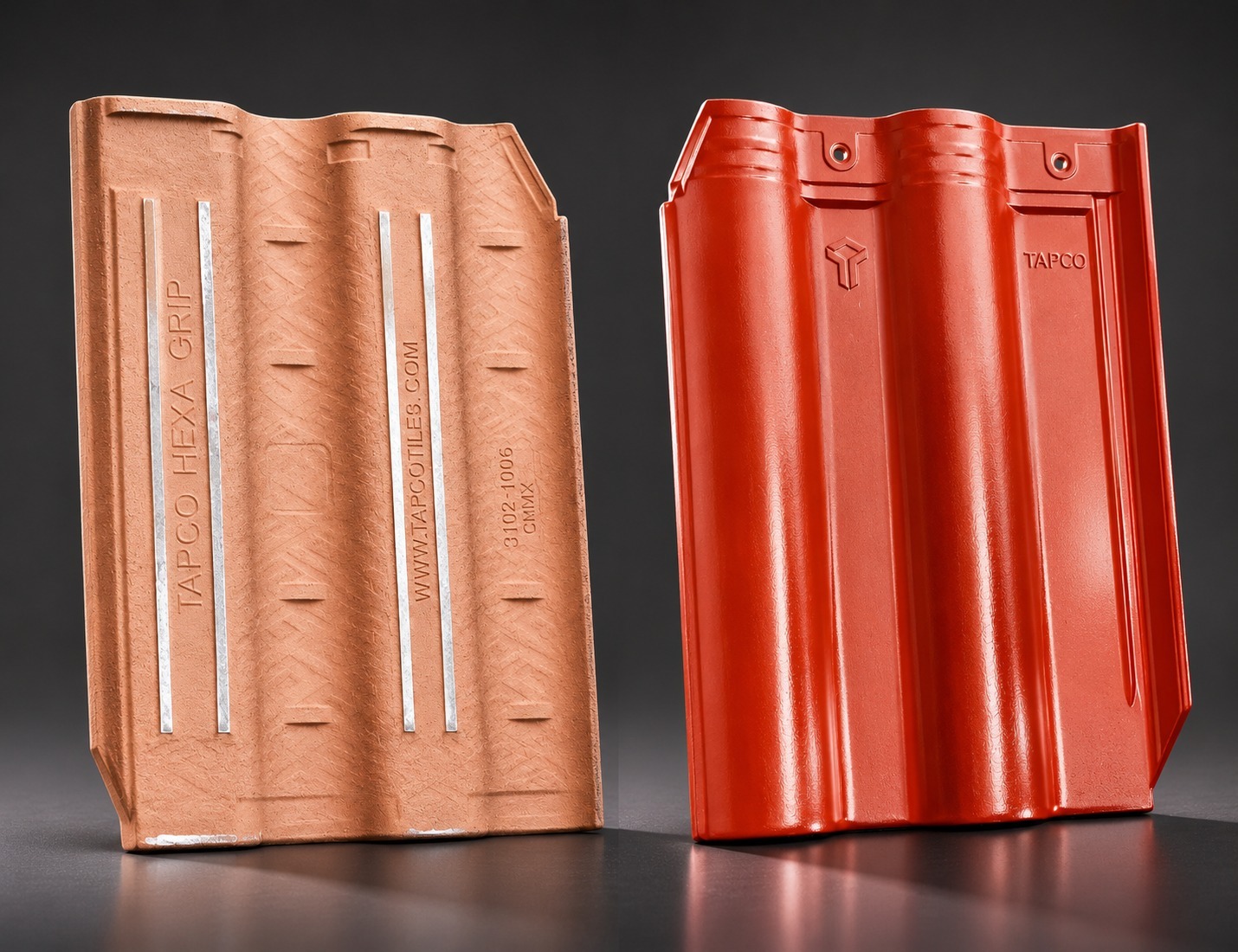
When choosing roof tiles for a new home, most people look at the colour, shape and finish. But the backside of a roof tile is also an important part of its design.
TAPCO HEXA GRIP™ Technology introduces a specially developed hexagonal embossed pattern on the backside of selected TAPCO luxury roof tiles. The design focuses on how the tile engages with its supporting structure, with the aim of improving the way the tile sits and remains positioned within a properly installed roofing system.
What Is TAPCO HEXA GRIP™ Technology?
TAPCO HEXA GRIP™ is a roof tile design technology that uses a hexagonal embossed pattern on the underside of the tile.
In simple words, the backside of the tile has a specially designed raised pattern rather than a completely plain surface.
This pattern is integrated into the tile’s backside structure. It is not an additional sheet or separate layer attached to the tile.
The purpose of this design is to create multiple potential engagement points between the tile and its supporting arrangement.
It reflects a simple idea: the design of a roof tile should not focus only on the part that is visible after installation.
The underside also deserves attention.
Why Does the Backside of a Roof Tile Matter?
When we look at a completed roof, we usually see only the upper surface of the tiles.
The backside remains hidden.
However, this part of the tile plays a role in how the product rests on the roof’s supporting structure.
In many tiled roofing systems, horizontal supports called battens are used to position and support the roof tiles.
The exact arrangement depends on the tile profile, roof slope, support material and installation method.
A roof tile must be suitable for this arrangement.
This is why the dimensions, profile, backside design and fixing requirements are all important when choosing roofing materials.
The importance of tile-to-support engagement
Tile-to-support engagement means the way a roofing tile comes into contact with and rests against its supporting components.
TAPCO HEXA GRIP™ has been developed with this interaction in mind.
Its hexagonal embossed backside is intended to provide multiple engagement points.
The engineering objectives include improving tile engagement, reducing unintended movement and supporting better distribution of mechanical stress.
These are design objectives. The actual improvement achieved must be established through suitable laboratory and installation testing.
HEXA GRIP™ should not be considered a replacement for proper tile fixing, suitable battens or the manufacturer’s installation requirements.
Understanding the Hexagonal Embossed Design
The hexagon is a familiar shape found in nature. Honeycomb structures are one example.
Hexagonal patterns are also used in different engineering and design applications because they can be arranged in a regular, repeating structure.
TAPCO HEXA GRIP™ takes inspiration from this geometry.
The technology uses a specially developed embossed pattern on the backside of the roof tile.
What makes this design different?
The main difference is the attention given to the hidden surface of the tile.
Instead of treating the backside only as a supporting surface, HEXA GRIP™ introduces a deliberate geometric pattern.
The design concept focuses on:
- Creating multiple potential engagement points.
- Improving the way the tile interacts with its support.
- Addressing unintended movement as an engineering objective.
- Considering how mechanical stress acts on the tile.
- Giving importance to the design of the tile’s backside.
The hexagonal shape is part of the technology’s identity. However, the presence of a hexagonal pattern alone does not prove that a tile is stronger or more stable than another product.
Those differences need to be confirmed through appropriate testing.
How Is HEXA GRIP™ Designed to Work?
To understand the concept, imagine a roofing tile being placed on its supporting batten.
The tile must rest in the correct position according to the intended installation arrangement.
Its shape, fixing points and backside geometry are all relevant to this interaction.
With HEXA GRIP™, the embossed hexagonal pattern introduces an additional design consideration at the underside of the tile.
The idea is to make use of the tile’s backside geometry to support engagement with the appropriate roofing support.
Does HEXA GRIP™ lock the tile in place?
HEXA GRIP™ should not be described as a mechanical locking system without verified technical evidence.
The embossed pattern is designed with tile engagement in mind, but it does not remove the need for approved fixing methods.
The tile must still be installed according to the requirements of the particular roofing product.
Correct spacing, suitable supports, tile overlap and fixing arrangements remain essential parts of a properly installed roof.
The Engineering Behind Premium TAPCO Ceramic Roof Tiles
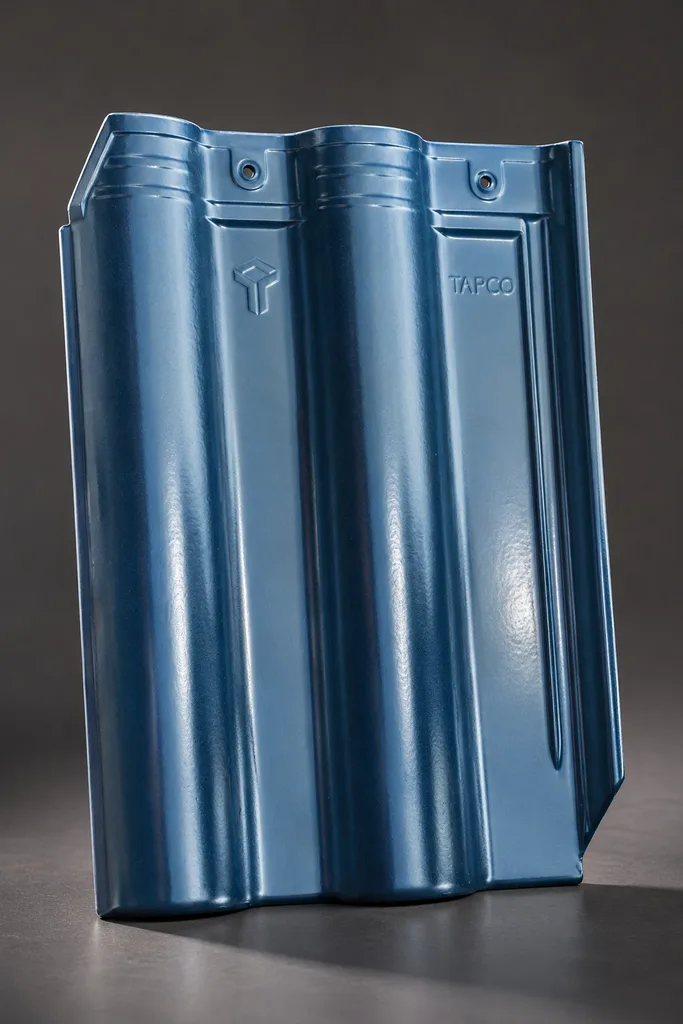
A roof tile is more than its visible colour.
The materials used to make it, its surface finish, profile and manufacturing process all contribute to the finished product.
TAPCO’s ceramic roofing range includes products made using imported white clay. TAPCO’s published product information also describes the use of imported colour pigments.
For homeowners choosing ceramic roof tiles in Kerala, these are useful details to consider when comparing different roofing options.
However, the exact material specification and surface treatment should always be confirmed for the particular product being purchased.
1. The ceramic tile body
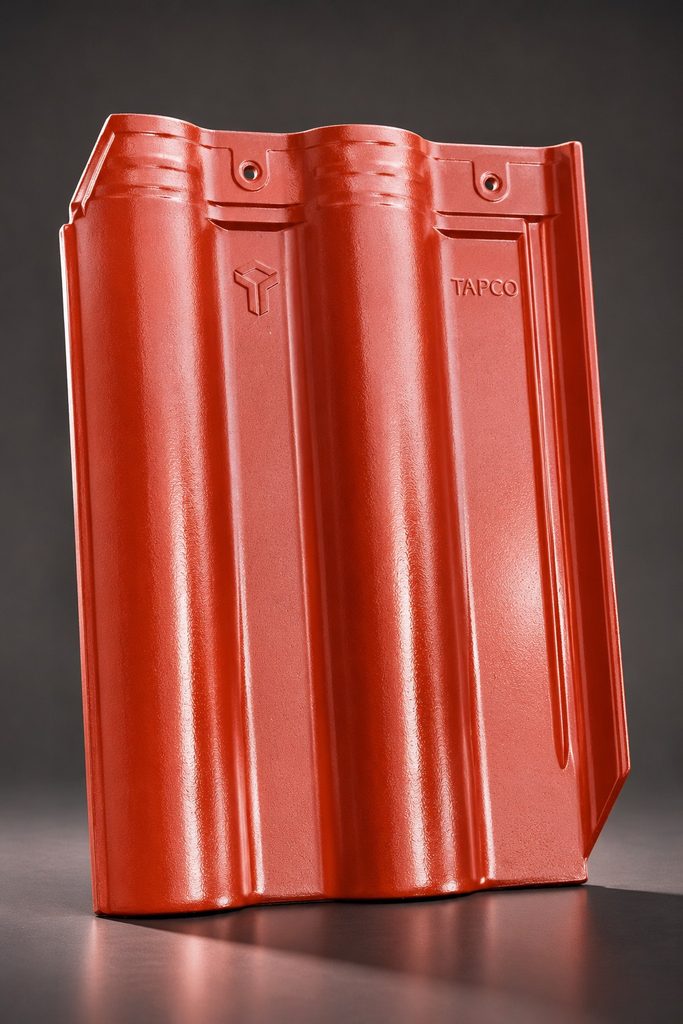
The body forms the main structure of a ceramic roof tile.
It gives the tile its shape and supports the surface finish and profile.
When comparing ceramic roof tiles, homeowners can ask about the raw materials, tile dimensions, weight and available technical specifications.
It is also important to check whether the selected product is suitable for the planned roof design.
2. Colour and surface finish
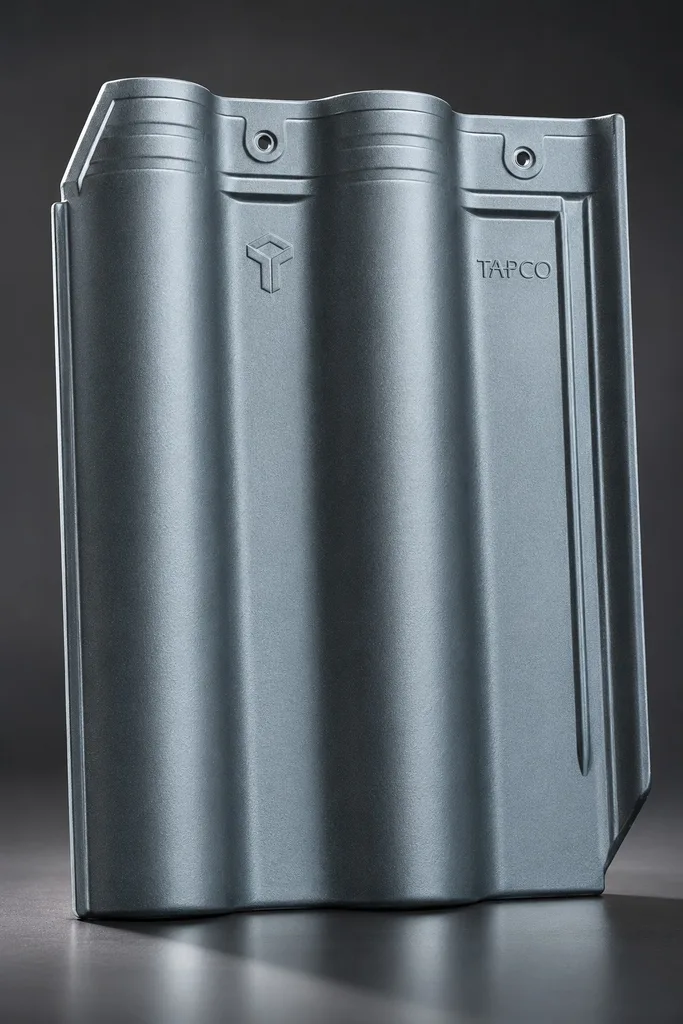
Roof tile colour can make a big difference to the appearance of a house.
TAPCO’s ceramic roofing range includes different colours and designs for traditional and modern architecture.
The finished appearance depends on the selected pigments, ceramic finish and manufacturing process.
For colour performance, homeowners should ask for product-specific information rather than assuming that every colour or finish will perform in the same way.
3. Backside design and tile engagement
This is where HEXA GRIP™ introduces a different design approach.
Along with the visible profile and finish, attention is given to the embossed geometry on the underside.
The technology brings together the appearance of a premium roof tile and an engineering concept focused on its supporting arrangement.
You can explore the available TAPCO ceramic roof tiles to understand the wider ceramic roofing range.
HEXA GRIP™ and Conventional Roof Tile Designs
Roof tiles come in different materials, shapes and backside designs.
Some use particular profiles to position the tile on its support. Others have different fixing arrangements depending on the product.
The important point is not to assume that one design is automatically stronger than another simply by looking at its shape.
Here is what homeowners should compare.
| What to Check | HEXA GRIP™ Design | Other Roof Tile Designs |
|---|---|---|
| Backside pattern | Specially developed hexagonal embossed pattern | Depends on the selected model |
| Tile engagement | A design focus of HEXA GRIP™ | Depends on the profile and support arrangement |
| Fixing requirements | Must follow the applicable installation instructions | Must follow the applicable installation instructions |
| Movement resistance | Intended engineering benefit requiring test evidence | Requires product-specific evidence |
| Suitability for the roof | Must be checked against the selected product specification | Must be checked against the selected product specification |
This comparison explains the design approach. It does not establish that HEXA GRIP™ performs better than every other roof tile.
Why Is Proper Roofing Design Important in Kerala?
Kerala experiences heavy monsoon rainfall, humid conditions and periods of strong wind.
For homeowners, these conditions make roof planning particularly important.
When choosing roofing materials, it is necessary to consider more than just the tile design.
Roof slope
The slope helps rainwater flow down the roof.
The required slope depends on the selected roofing tile and installation system.
Before installation, the roof design should be checked against the manufacturer’s recommendations.
Roof tile fixing
The tiles should be positioned and fixed correctly using the method recommended for the selected product.
The fixing arrangement may depend on the roof slope, location and expected weather conditions.
HEXA GRIP™ is designed with tile engagement in mind, but its embossed backside does not replace correct installation.
Roof drainage
During Kerala’s monsoon, rainwater must be able to move away from the roof properly.
Gutters, downpipes and other drainage details should be planned according to the building design.
Even a carefully designed roofing tile may experience problems if the complete roof is not installed and maintained correctly.
Regular maintenance
Roofing tiles should be checked for visible damage, displaced sections and accumulated debris.
Homes surrounded by trees may also need additional attention because leaves, moss and algae can collect on roof surfaces.
Regular inspection helps identify problems that may need professional attention.
What Should Homeowners Check Before Choosing HEXA GRIP™ Roof Tiles?
If you are considering a TAPCO roof tile featuring HEXA GRIP™, start by examining the actual product.
Looking at both sides of the tile can help you understand its profile and construction.
Before finalising your purchase, check the following:
- Actual product design: Look at the front profile and the hexagonal embossed backside.
- Tile dimensions: Confirm the size, coverage and weight of the selected model.
- Roof slope: Check whether the tile is suitable for your planned roof.
- Installation method: Ask about the required battens, spacing and fixing arrangement.
- Colour and finish: Compare physical samples with your house design.
- Technical information: Request available product specifications and relevant test reports.
- Availability: Confirm which TAPCO product models currently feature HEXA GRIP™.
You can also review the TAPCO roof tile collection to compare the available profiles and designs.
Why Look Beyond the Surface When Buying Roof Tiles?
A beautiful roof is an important part of a home, but choosing roof tiles only by colour or appearance may leave out other useful details.
Two tiles may look similar from a distance, yet have different profiles, dimensions, fixing requirements or backside designs.
Understanding these differences helps homeowners ask the right questions before buying.
This is the idea behind TAPCO’s HEXA GRIP™ campaign:
THE VALUE IS BENEATH THE SURFACE.
It encourages homeowners, architects and roofing contractors to look closely at the design details that are not visible once the roof is completed.
TAPCO Roof Tiles brings more than 46 years of experience in roofing and building materials to its product range.
You can learn more about the company through the TAPCO About page.
Frequently Asked Questions About TAPCO HEXA GRIP™ Technology
1. What is TAPCO HEXA GRIP™ Technology?
TAPCO HEXA GRIP™ is a specially developed hexagonal embossed pattern integrated into the backside of selected TAPCO roofing tiles. It is designed with a focus on tile-to-support engagement and the way the tile sits within the roofing system.
2. What is the purpose of the hexagonal pattern on the backside of the tile?
The pattern is intended to create multiple engagement points between the tile and its supporting arrangement. Its actual effect on movement resistance or stability must be confirmed through appropriate testing.
3. Is HEXA GRIP™ a separate layer added to the roof tile?
No. HEXA GRIP™ is described as an embossed pattern integrated into the backside structure of the tile, not as an additional sheet or coating.
4. Does HEXA GRIP™ prevent roof tiles from moving during strong winds?
Reducing unintended tile movement is one of the design objectives of HEXA GRIP™. However, wind resistance depends on the full roofing system, and any specific performance advantage needs suitable test evidence.
5. Is HEXA GRIP™ suitable for homes in Kerala?
Its suitability depends on the selected tile model, roof slope, support arrangement and installation requirements. For Kerala homes, correct roof fixing and rainwater drainage are particularly important because of the monsoon climate.
6. Does HEXA GRIP™ replace normal roof tile fixing methods?
No. The embossed design should not be treated as a replacement for the recommended fixing arrangement. Always follow the installation instructions for the particular roofing product.
7. Where can I find TAPCO HEXA GRIP™ roof tiles?
Contact TAPCO Roof Tiles to confirm the models currently available with HEXA GRIP™ Technology. You can also ask for product samples, installation information and available technical specifications before placing an order.
Conclusion
Roofing innovation is not always visible from outside a building.
The colour and finish of a tile are important, but the material, profile, backside design and installation requirements also deserve attention.
TAPCO HEXA GRIP™ Technology introduces a hexagonal embossed backside concept designed around the interaction between a roof tile and its supporting structure.
It is an example of how thoughtful product design can extend beyond the visible surface.
For homeowners planning a new house or renovating an existing tiled roof, understanding these details can help them make a more informed roofing decision.
TAPCO HEXA GRIP™ – ENGINEERED TO HOLD STRONG.