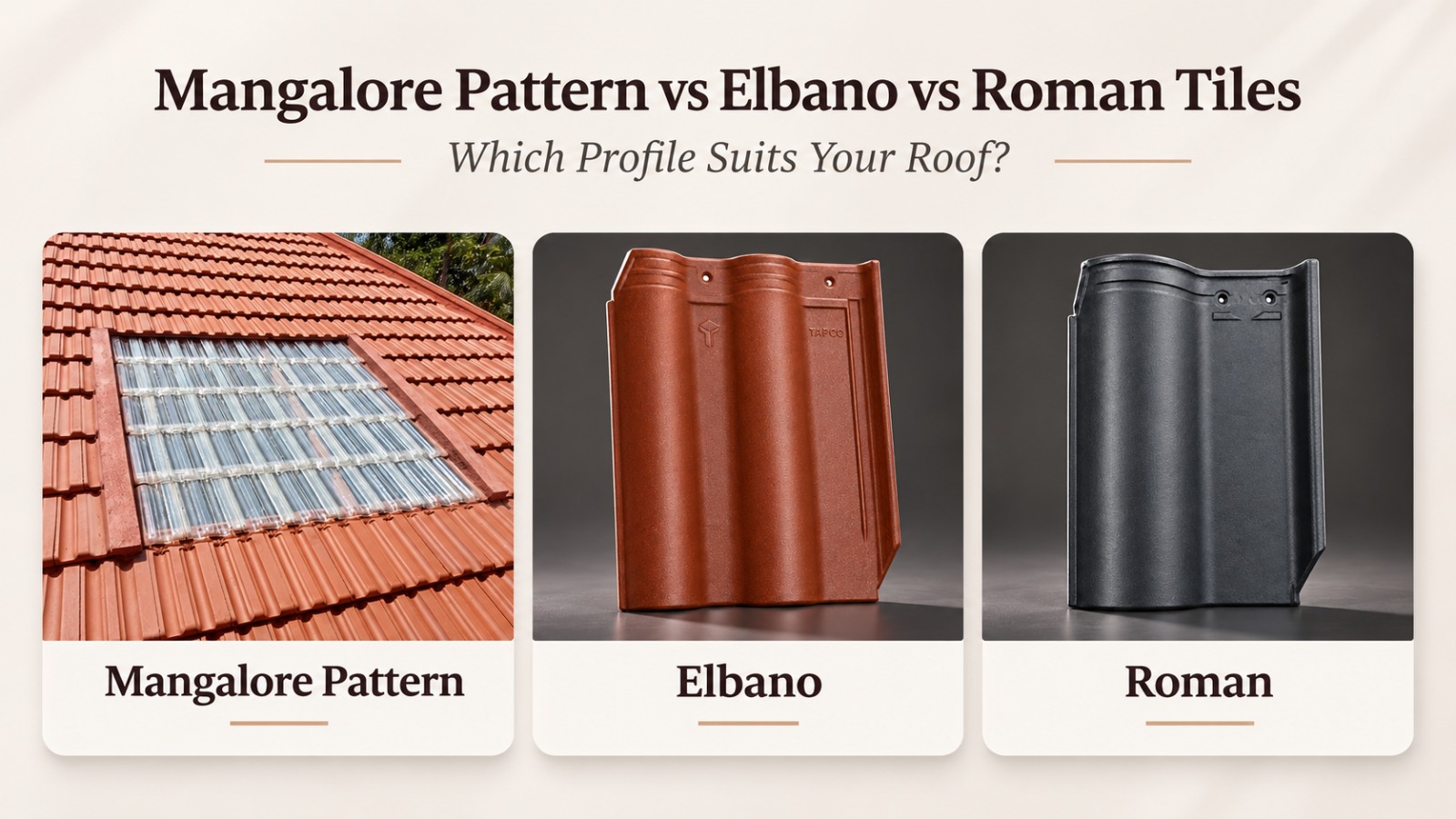
Mangalore Pattern, Elbano and Roman roof tiles have different designs, so the right choice depends on the style of your house and the roofing requirements. Mangalore Pattern suits a traditional tiled-roof appearance, Elbano gives a neat roof with repeated grooves, and Roman tiles create a more prominent curved look.
For homes in Kerala, appearance is only one part of the decision. When choosing ceramic roof tiles in Kerala, it is important to consider the roof slope, supporting structure and proper installation, especially during the monsoon season.
Understanding Different Roof Tile Profiles
When planning a new house, homeowners usually spend a lot of time choosing the exterior paint, windows and doors. But the roof also makes a big difference to the overall look of the building.
One important detail is the roof tile profile.
A roof tile profile simply means the shape and surface pattern of a tile. Some tiles have narrow grooves, while others have raised curves or a more prominent wave-like design.
These differences change how the completed roof looks. They can also affect how tiles overlap and how they need to be installed.
Mangalore Pattern, Elbano and Roman are three styles worth comparing if you are planning a sloping roof for your home.
1. Mangalore Pattern Roof Tiles – A Traditional Roofing Style
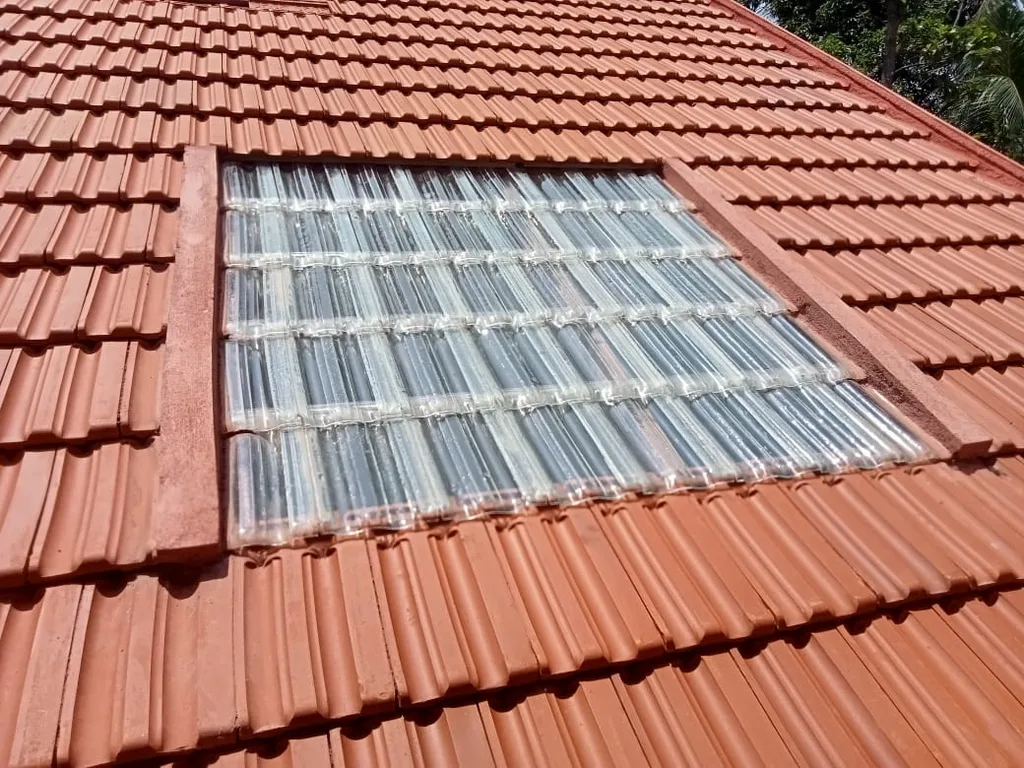
Mangalore Pattern roof tiles are commonly associated with traditional South Indian houses. They are generally made from fired clay and have a familiar grooved, overlapping design.
You can see this style on older Kerala homes, traditional buildings and houses with sloping roofs.
What Makes Mangalore Pattern Tiles Different?
The main feature is their traditional shape. The tiles are arranged in overlapping rows, with grooves and raised edges that help them fit together.
Their appearance is simple and familiar, making them a natural choice for homeowners who prefer traditional roofing designs.
When Should You Consider Mangalore Pattern Tiles?
This profile is worth considering for:
- Traditional Kerala-style houses.
- Homes with wooden windows and natural exterior finishes.
- Renovation projects where the existing roof has a similar design.
- Houses where a classic tiled-roof appearance is preferred.
Before using Mangalore Pattern tiles for renovation, check whether the new tiles match the dimensions and fitting requirements of the existing roofing system.
Tiles from different manufacturers may look similar but may not fit together correctly.
2. Elbano Roof Tiles – A Neat and Detailed Roof Design
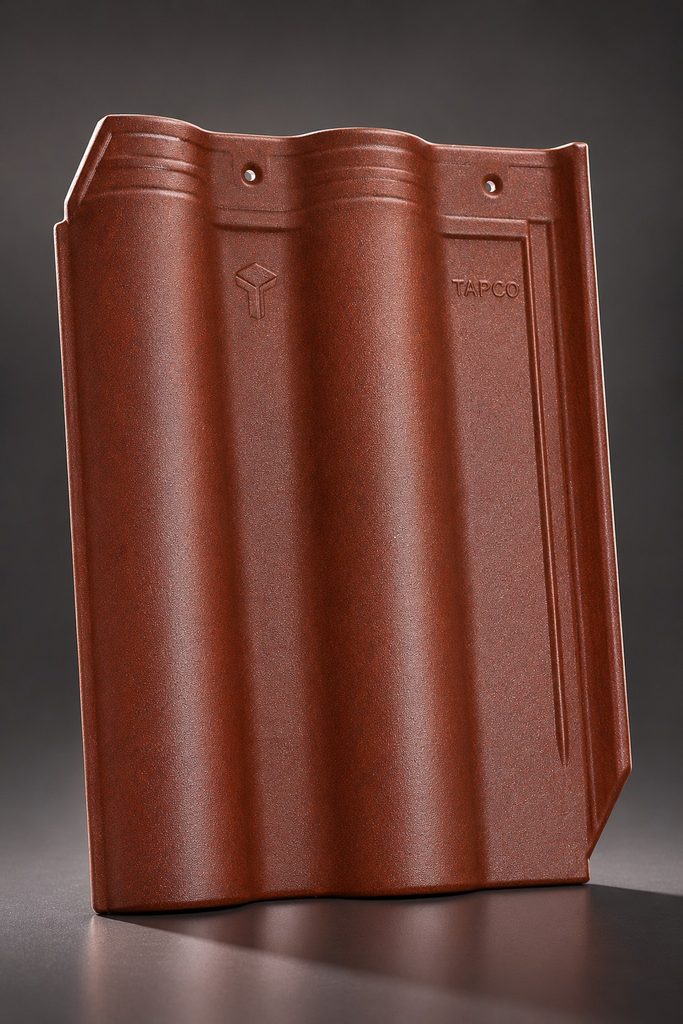
Elbano roof tiles have a distinctive surface pattern with repeated raised grooves. When installed across a sloping roof, they create a regular and detailed appearance.
This profile can be considered for both traditional and modern house designs, depending on the selected colour and finish.
What Makes Elbano Tiles Different?
Unlike a simple traditional profile, Elbano tiles have a more noticeable surface design.
The repeated grooves create a consistent pattern across the roof. This can look attractive on houses where the tiled roof forms a large part of the exterior.
Elbano is one of the profiles listed in the TAPCO roof tile collection.
Which Homes Can Suit Elbano Tiles?
Elbano tiles may work well for:
- Modern Kerala homes with sloping roofs.
- Villas with multiple roof sections.
- Traditional-style houses with updated exterior designs.
- Homes where the owner wants a detailed but balanced roof appearance.
For example, Elbano tiles in a suitable earthy shade can complement cream or off-white walls. Darker colour options may work well with contemporary exterior finishes.
The final choice should be based on an actual tile sample and the house elevation.
Homeowners can explore TAPCO’s ceramic roof tile collection to compare available Elbano options.
3. Roman Roof Tiles – A Distinctive Curved Appearance
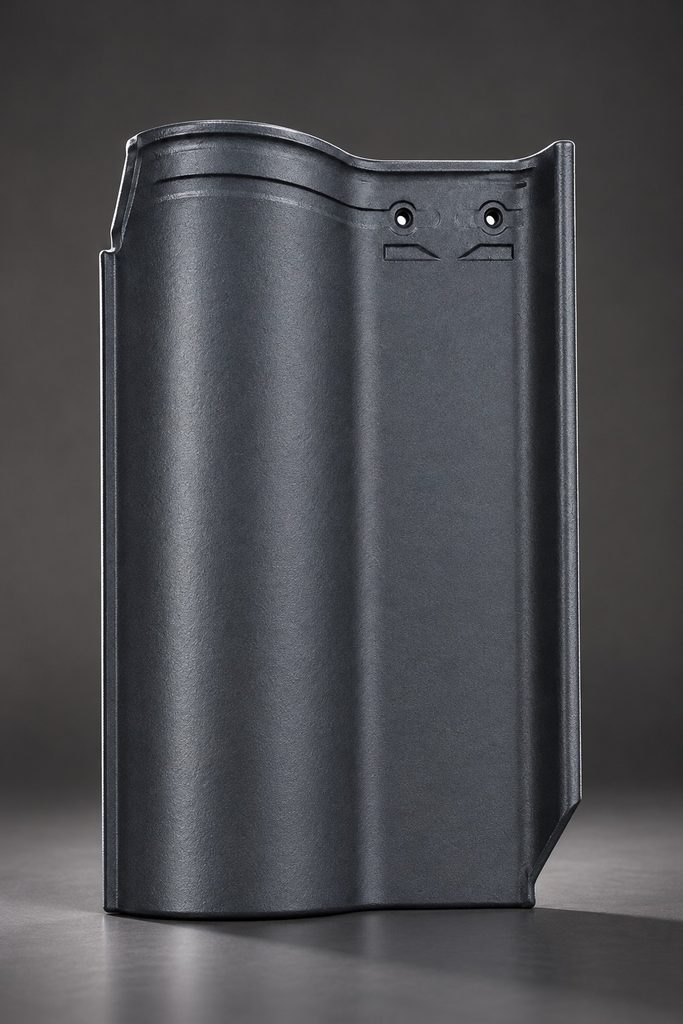
Roman roof tiles are known for their pronounced curved profile. Their shape creates a stronger wave-like pattern compared with tiles that have several smaller grooves. For homeowners exploring ceramic roof tiles in Kerala, Roman-style tiles can be an attractive option for houses with large sloping roofs.
This makes the roof more visually noticeable, especially on homes with large sloping roof sections.
What Makes Roman Tiles Different?
The main difference is the surface shape.
Roman tiles generally have a prominent rounded section alongside a flatter area. When arranged across a roof, this creates a repeating curved pattern.
The profile can add character to a house without depending on complicated exterior decoration.
Which Homes Can Suit Roman Roof Tiles?
Roman tiles may suit:
- Villas with large sloping roof areas.
- Houses inspired by Mediterranean architecture.
- Contemporary homes where the roof is a major design feature.
- Homes where a more curved roofing pattern is preferred.
For example, Roman tiles can complement a light-coloured house with simple exterior finishes and clearly visible roof sections.
TAPCO lists Roman roof tile options in its product collection. Homeowners should compare the available colours and finishes before selecting a particular model.
4. Mangalore Pattern vs Elbano vs Roman Tiles: A Simple Comparison
Although these profiles have different appearances, none should be selected based on looks alone.
Here is a simple comparison to help you understand their design differences.
| Feature | Mangalore Pattern | Elbano | Roman |
|---|---|---|---|
| General appearance | Traditional and familiar | Neat, detailed pattern | Prominent curved pattern |
| Surface design | Grooves and interlocking edges | Repeated raised grooves | Rounded wave with flatter section |
| Design preference | Classic Kerala architecture | Traditional and modern houses | Villas and expressive sloping roofs |
| Visual effect | Familiar tiled-roof finish | Regular, detailed arrangement | Stronger curved appearance |
| Material | Commonly fired clay | Check selected product specification | Check selected product specification |
| Installation | Follow selected model’s requirements | Follow selected model’s requirements | Follow selected model’s requirements |
This comparison focuses mainly on the appearance of the profiles. Roof slope, fixing method, tile weight and other technical requirements must be checked for the exact product you intend to purchase.
5. Which Roof Tile Profile Is Suitable for Kerala’s Climate?
Kerala experiences heavy monsoon rain, humid weather and warm temperatures. These conditions make proper roof planning important.
However, it would not be correct to say that Mangalore Pattern, Elbano or Roman tiles are automatically better simply because of their shape.
The performance of a tiled roof depends on the complete roofing system.
Roof Slope
The roof should have a slope that is suitable for the selected tile.
If the slope is not suitable, rainwater may not flow away as intended. This can increase the possibility of water entering through vulnerable areas.
Always check the manufacturer’s recommended roof pitch before installation.
Tile Overlap and Fixing
Roof tiles are arranged so that adjoining pieces overlap or interlock as intended.
The amount of overlap, spacing and fixing arrangement may vary from one product to another.
An experienced roofing contractor should follow the installation guidelines for the selected model.
Roof Drainage
During Kerala’s monsoon, gutters, valleys and downpipes help manage rainwater.
Blocked gutters or poorly planned drainage can create problems even when suitable roof tiles have been used.
Moss and Algae
In damp or shaded areas, moss and algae may develop on roofing surfaces.
Regular inspection and suitable cleaning can help maintain the roof’s appearance. Always follow the product manufacturer’s cleaning advice.
The important point is simple: choose the tile profile you like, but make sure the complete roof is designed for the local conditions.
6. How Does Roof Tile Profile Affect the Look of Your Home?
The roof occupies a large visible area in many Kerala houses. Changing its tile profile can noticeably change the overall appearance.
For Traditional Kerala Houses
If your house has a traditional design with wooden details, a veranda and sloping roof sections, a Mangalore-style appearance may complement the architecture.
Elbano can also be considered if you prefer a more detailed roof pattern while keeping the traditional character of the house.
For Modern Villas
Modern villas often combine simple wall colours with larger windows and clearly defined roof sections.
Elbano can provide a regular, detailed roofing pattern. Roman tiles may be worth considering when you want the curved roof design to stand out more.
For Homes with Multiple Roof Sections
Some Kerala houses have several slopes, ridges, hips and valleys.
In such houses, the selected tile needs to work with the complete roof layout. Matching ridge tiles, edge details and other suitable accessories are also important.
Before making the final decision, ask your architect or roofing contractor to review the selected profile against the roof plan.
7. What Should You Check Before Choosing a Roof Tile Profile?
A roof tile may look attractive in a showroom, but you also need to understand how it will work on your house.
Before buying, check these important points.
Check the Actual Tile Sample
Photographs are useful for comparing designs, but they may not show the exact colour or finish.
Look at a physical sample in natural daylight. Check the surface shape, edges, colour and overall finish.
Check the Roof Structure
Different roofing products can have different weights and installation requirements.
Your engineer or roofing professional should confirm whether the roof structure can support the selected material and installation arrangement.
Ask About Tile Size and Coverage
Do not calculate the number of tiles needed using only their overall dimensions.
Ask for the effective coverage of the selected tile, including the required overlap. This will help your contractor estimate the quantity more accurately.
Compare the Complete Roofing Cost
The total roofing cost involves more than the price of individual tiles.
Consider the roofing tiles, supporting materials, fixing accessories, installation work and other necessary components.
Get quotations based on the same roof plan so that you can compare them properly.
Check Product Availability
Before finalising a colour or profile, confirm the current availability of the selected model and matching accessories.
You can browse the TAPCO roof tile designs and profiles to understand the options available for different house styles.
8. Which Profile Should You Choose?
There is no single profile that suits every home.
If you prefer the familiar appearance of a traditional Kerala tiled roof, Mangalore Pattern is a style worth considering.
If you want a neat roof with repeated grooves that can complement both traditional and contemporary designs, Elbano may be a suitable option.
If you prefer a more noticeable curved pattern, Roman tiles can create a different architectural appearance.
However, your final decision should also consider the roof slope, tile material, installation requirements, budget and available colours.
The easiest way to choose is to compare actual tile samples alongside your house elevation rather than making the decision from a photograph alone.
Frequently Asked Questions
1. What is the main difference between Mangalore Pattern, Elbano and Roman roof tiles?
The main difference is their profile and overall appearance. Mangalore Pattern has a traditional grooved design, Elbano features repeated raised grooves, and Roman tiles have a more prominent curved shape.
2. Are Elbano roof tiles suitable for Kerala homes?
Elbano roof tiles can be considered for Kerala homes with suitable sloping roof designs. The exact product should be checked for recommended slope, installation method and compatibility with the supporting structure.
3. Are Roman roof tiles suitable for modern houses?
Yes, Roman roof tiles can complement modern houses, particularly those with visible sloping roof sections. Their curved appearance can create an interesting contrast with simple exterior walls and contemporary architectural details.
4. Which roof tile profile is better for heavy rain?
No profile should be considered better for heavy rain based only on its appearance. The selected product must suit the roof slope, fixing arrangement, drainage design and installation requirements.
5. Can Mangalore Pattern tiles be replaced with Elbano or Roman tiles?
It may be possible to change the tile profile during roof renovation, but the existing roof structure needs to be checked first. Tile weight, spacing, fixing arrangements and the roof slope may need changes, so professional assessment is important.
6. Are Roman and Elbano roof tiles available in different colours?
Yes, TAPCO lists different colour options within its Elbano and Roman roof tile collections. Check current product availability and compare physical samples before confirming a colour.
7. How do I choose the correct roof tile profile for my house?
Start with your house design, then compare the appearance of different profiles. Check the manufacturer’s specifications and discuss the roof slope, structure, drainage and installation requirements with your roofing professional.
Conclusion
Mangalore Pattern, Elbano and Roman roof tiles offer different looks for different house designs. The right choice depends on the kind of home you are building and the appearance you want to achieve.
A traditional house may look attractive with a classic Mangalore-style roof, while Elbano and Roman profiles offer other design possibilities for modern and traditional homes.
Whatever profile you choose, give equal importance to the roof structure, proper installation and rainwater drainage.
TAPCO Roof Tiles, based in Choolissery, Thrissur, has over 46 years of experience in roofing and building materials.
If you are planning a new roof or renovating an existing one, explore the available designs and discuss your requirements with the TAPCO team. You can also find a TAPCO showroom in Kerala to enquire about roofing options.