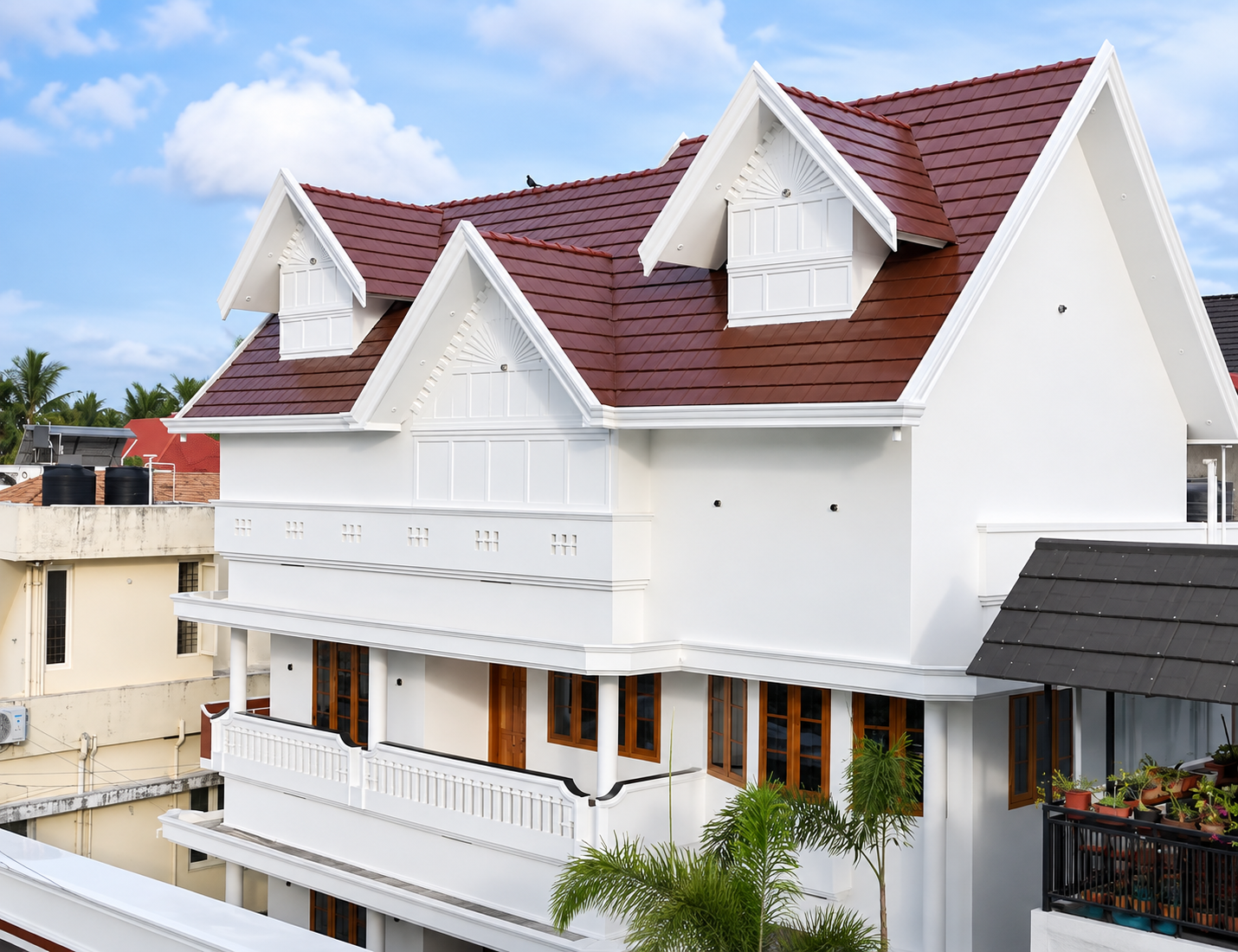
Kerala receives heavy rainfall during the monsoon season. While rain brings relief from the summer heat, it can also create problems for houses that do not have a proper roof drainage system.
Water collecting on the roof, overflowing gutters and rainwater entering through damaged areas are common concerns during heavy rainfall. If these problems are ignored, they may lead to damp walls, ceiling stains and damage to different parts of the building.
This is why proper roof drainage is important for every home, especially in areas that receive frequent rain.
A well-planned roof drainage system helps rainwater move away from the roof and building safely. It also supports the long-term performance of the roofing system.
What Is a Roof Drainage System?
A roof drainage system is designed to collect and direct rainwater away from the roof and building.
In most houses with sloping roofs, rainwater flows down the roof surface towards the edges. Gutters collect this water and downpipes carry it towards a suitable drainage point.
A typical roof drainage system includes:
- Roof slope: Helps rainwater flow towards the roof edges.
- Gutters: Collect rainwater coming down from the roof.
- Downpipes: Carry collected water away from the roof.
- Drainage outlets: Direct rainwater towards an appropriate discharge area.
All these parts need to work together.
Even if a house has good roofing materials, poor drainage planning can create problems during heavy rainfall.
Why Proper Roof Drainage Is Important During Kerala’s Monsoon

1. Helps Prevent Water Collection on the Roof
During heavy rainfall, a large amount of water falls on the roof within a short period.
If the roof does not have the required slope or the drainage outlets are blocked, water may collect in certain areas.
Even when using ceramic roof tiles in Kerala, proper roof slope and drainage are important during heavy rainfall.
Standing water can increase the risk of leakage, especially around joints, damaged roofing sections and poorly sealed areas.
A properly designed roof slope allows rainwater to move towards the drainage system without unnecessary water collection.
For tiled roofs, the required slope depends on the tile profile, roofing system and manufacturer’s installation guidelines.
2. Reduces the Risk of Roof Water Leakage
Roof leakage is one of the common problems homeowners face during the rainy season.
Water may enter through broken tiles, damaged flashing, poorly installed joints or areas where rainwater is unable to drain properly.
When rainwater does not flow away as intended, these weak points may become more vulnerable.
Proper drainage helps reduce unnecessary water accumulation, but it is not a replacement for correct roofing installation and waterproofing.
Homeowners should check both the roofing materials and drainage system before the monsoon begins.
3. Helps Protect Exterior Walls from Dampness
Rainwater overflowing from gutters can flow directly down the exterior walls.
Over time, repeated exposure to water may cause paint damage, stains and damp patches.
This is particularly important for homes in Kerala, where frequent rainfall and humid conditions can make moisture-related problems more difficult to manage.
Properly installed gutters and downpipes help direct water away from the walls and reduce unnecessary exposure to rainwater.
4. Helps Reduce Water Accumulation Around the Foundation
Roof drainage is not only about protecting the roof.
When rainwater falls directly near the base of a building, it may collect around the foundation if the surrounding ground does not drain properly.
Repeated water accumulation can create dampness and other moisture-related concerns.
Downpipes should discharge water into a suitable drainage arrangement that carries it away from the building.
The final discharge location should be planned according to the site conditions and local drainage requirements.
5. Supports the Long-Term Performance of Roofing Materials
Roofing materials are continuously exposed to sunlight, rain, wind and changing weather conditions.
A properly functioning drainage system helps reduce unnecessary water accumulation around roof edges, joints and other sensitive areas.
However, drainage alone cannot determine the lifespan of a roof. The quality of the roofing materials, roof design, installation and regular maintenance are also important.
When selecting roof tiles in India, homeowners should consider the roofing system as a whole rather than focusing only on the appearance of the tiles.
Common Roof Drainage Problems in Kerala Homes
Even a well-designed drainage system can develop problems when it is not maintained properly.
Here are some common issues homeowners should watch for.
Blocked Gutters
Leaves, dust, small branches and other debris can collect inside roof gutters.
When the gutters become blocked, rainwater may overflow instead of flowing towards the downpipes.
This is especially common in houses surrounded by trees.
Cleaning gutters before the rainy season can help prevent this problem.
Incorrect Roof Slope
The slope of a roof plays an important role in rainwater drainage.
If the slope is unsuitable for the selected roofing material, water may not drain as expected.
For tiled roofs, the slope should follow the requirements of the tile profile and installation system.
A roofing professional should check the design before installation.
Damaged or Misaligned Roof Tiles
Broken, displaced or poorly aligned roof tiles can allow rainwater to enter vulnerable areas of the roof.
Strong winds and improper installation may also affect tile positioning.
Inspecting the roof and replacing damaged tiles when necessary can help reduce leakage risks.
Damaged Gutters and Downpipes
Cracked gutters, loose joints and damaged downpipes can interrupt the normal flow of rainwater.
Water may leak from these areas and fall directly onto walls or near the foundation.
Regular inspection helps identify these problems before they become more serious.
How to Improve Roof Drainage Before the Monsoon
Preparing the roof before heavy rainfall can help homeowners avoid many common drainage problems.
1. Clean the Gutters and Downpipes
Remove leaves, dirt and other debris from the gutters.
Check whether water can pass freely through the downpipes and reach the intended drainage outlet.
2. Inspect the Roof Tiles
Look for visible cracks, broken tiles and displaced roofing sections.
Damaged tiles should be repaired or replaced using suitable materials and installation methods.
Avoid walking directly on a tiled roof without proper safety equipment and professional guidance.
3. Check Roof Joints and Flashing
Areas around chimneys, walls, valleys and other roof openings need proper detailing.
Damaged flashing or poorly sealed joints can allow rainwater to enter the building.
These areas should be inspected by an experienced roofing professional.
4. Check the Roof Slope and Drainage Design
If rainwater regularly collects on the roof, the slope or drainage arrangement may need professional assessment.
Do not attempt major roof modifications without checking the structural and roofing requirements.
5. Make Sure Water Flows Away from the Building
Check where the downpipes discharge rainwater.
Water should be directed towards a suitable drainage point rather than allowed to collect near the foundation.
Choosing the Right Roofing Tiles for Kerala’s Rainy Climate
Roof drainage and roofing material selection should be planned together.
Kerala’s monsoon conditions make it important to choose roofing materials that are suitable for the building design, roof slope and local weather.
When selecting roofing tiles, homeowners should consider the tile profile, installation requirements, fixing methods and compatibility with the roof structure.
Clay and ceramic roof tiles are commonly considered for sloping roof designs. However, their suitability depends on the specific product and the way the roofing system is designed and installed.
If you are planning a new house or replacing an existing tiled roof, you can explore TAPCO’s roof tile collection to understand the available designs and roofing options.
It is also important to discuss the roof slope, drainage arrangement and installation requirements with a qualified roofing professional before making the final decision.
How Often Should Roof Drainage Be Checked?
Roof drainage should be inspected regularly, particularly before the monsoon season.
Homes surrounded by trees may need more frequent gutter cleaning because leaves and debris can collect quickly.
It is also useful to check the drainage system after periods of heavy rain or strong winds.
If you notice overflowing gutters, water stains, damp patches or repeated leakage, arrange an inspection instead of waiting for the problem to become more serious.
A simple maintenance routine can help identify drainage issues early and reduce the risk of costly repairs.
Frequently Asked Questions
1. Why is roof drainage important in Kerala?
Kerala receives heavy seasonal rainfall. Proper roof drainage helps rainwater flow away from the roof and building, reducing the risk of water accumulation, overflowing gutters and moisture-related damage.
2. What causes poor roof drainage?
Blocked gutters, damaged downpipes, unsuitable roof slopes and poor drainage planning are some common causes of roof drainage problems.
3. Can poor roof drainage cause water leakage?
Yes. Poor drainage can contribute to water accumulation and increase leakage risks around damaged tiles, joints and other vulnerable roof areas. However, leakage can also result from installation defects and damaged roofing components.
4. How can I improve roof drainage during the monsoon?
Clean the gutters, inspect downpipes, check roof tiles and ensure that rainwater is directed away from the building. Seek professional advice if you notice repeated water collection or leakage.
5. Do tiled roofs need gutters?
Gutters are commonly used on tiled roofs to collect rainwater and direct it towards downpipes. The need for gutters and their design depends on the roof layout, site conditions and drainage requirements.
Conclusion
Proper roof drainage is an important part of protecting a home during Kerala’s monsoon season.
A well-planned drainage system helps rainwater flow away from the roof, reduces unnecessary water accumulation and helps protect walls and other parts of the building from moisture-related problems.
Regular gutter cleaning, roof inspections and timely repairs can make a difference during periods of heavy rainfall.
Whether you are building a new home or renovating an existing one, make sure the roof design, roofing materials and drainage system are planned together.
For homeowners exploring roofing options, TAPCO offers a range of roof tile designs suitable for different architectural preferences. Visit the TAPCO website to learn more about the available roofing products.