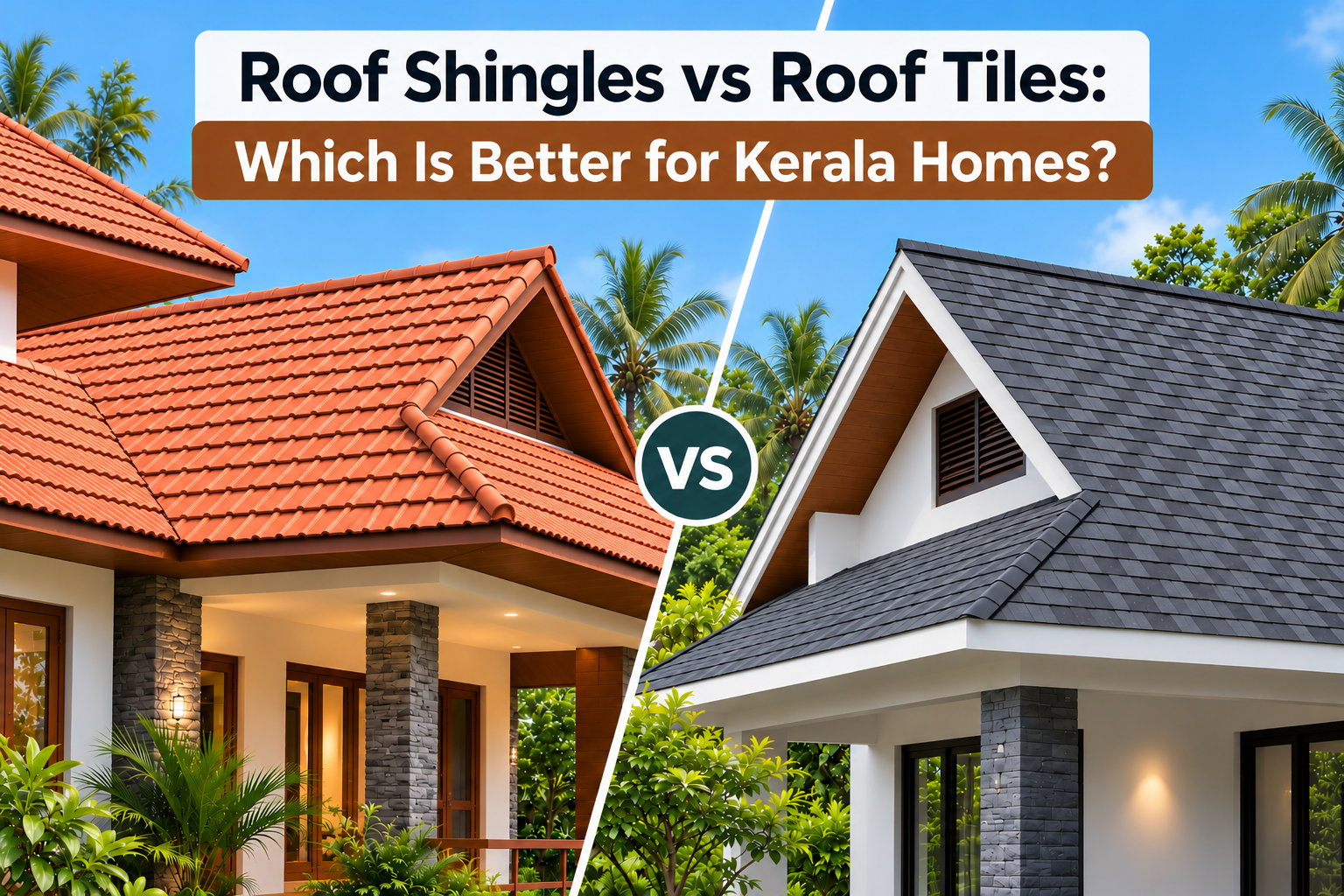
Choosing the right roofing material is an important part of building a house. The roof should match the design of your home, suit the local weather and fit your budget. In Kerala, where houses experience heavy monsoon rain, humidity and strong sunlight, it is important to consider more than just appearance when selecting a roofing material.
Roof tiles and roofing shingles are two options that homeowners may consider, especially when planning a sloping roof or a modern villa. Both can give a house an attractive finish, but they differ in materials, installation methods, maintenance requirements and overall appearance.
So, which is better for Kerala homes: roof shingles or roof tiles?
The answer depends on your house design, roof structure, budget and the type of roofing product you choose. Let us look at the main differences to help you make a suitable choice.
1. What Are Roof Tiles?
Roof tiles are individual roofing units arranged in overlapping rows to cover a roof. They are available in different materials, including clay, terracotta, ceramic and concrete.
Roof tiles are commonly used in Kerala homes, particularly in houses with sloping roofs. They can complement traditional architecture as well as modern villas, depending on the tile design, colour and finish.
Some of the main features of roof tiles include:
- Available in different shapes, colours and designs.
- Suitable for a range of traditional and contemporary house styles.
- Installed in overlapping rows according to the product and roofing system.
- Require suitable roof support and correct installation.
- Allow individual damaged tiles to be inspected and replaced when the roofing system permits it.
The weight, durability and maintenance requirements depend on the tile material and product quality. Before choosing a tile, check whether the roof structure is suitable for the selected product.
You can explore the TAPCO roof tile collection to see roofing options for different house designs.
2. What Is Roofing Shingles?
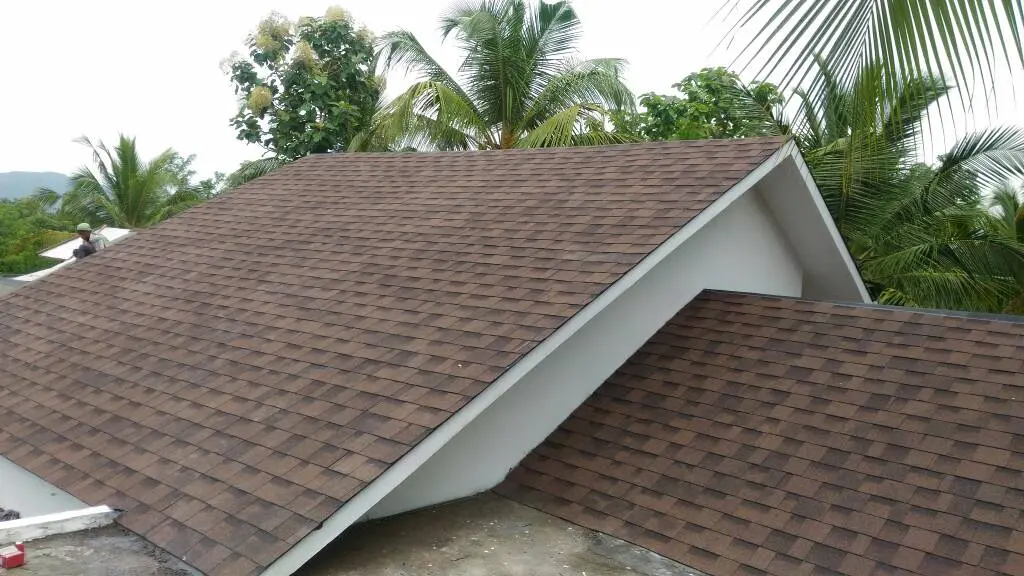
Roofing shingles are roofing pieces installed in overlapping layers to cover a roof. They are available in different materials, including asphalt, wood and certain composite products.
Asphalt shingles are commonly seen on modern residential buildings and villas. They are generally installed over a suitable roof deck, following the manufacturer’s installation instructions.
The exact features of a shingle roof depend on the material and the complete roofing system. Important factors include the roof slope, underlay, fixing method, ventilation and waterproofing details.
Some homeowners choose shingles because they prefer their layered appearance and the design options available. However, the product must be suitable for the local climate and installed correctly.
It is also important to understand that roofing shingles and stone-coated metal roofing are not necessarily the same product. If you are comparing these options, check the exact material and construction before making a decision.
3. Roof Shingles vs Roof Tiles: Main Differences
Roof tiles and shingles can both be used for sloping roofs, but they are not interchangeable in every situation.
Here is a simple comparison.
| Feature | Roof Tiles | Roofing Shingles |
|---|---|---|
| Material | Clay, terracotta, ceramic or concrete, depending on the product | Asphalt, wood or composite materials, depending on the product |
| Appearance | Traditional, natural or modern, depending on the tile design | Layered appearance with different colours and styles |
| Installation | Individual tiles are fixed or laid according to the roofing system | Shingles are installed in overlapping layers over a suitable roof base |
| Roof structure | Weight and support requirements depend on the tile type | Decking and support requirements depend on the shingle system |
| Maintenance | Inspection and replacement of damaged tiles may be required | Inspection of shingles, edges, joints and waterproofing details may be required |
| Cost | Depends on tile type, quantity, accessories and labour | Depends on shingle material, roof preparation and installation |
| Suitability for Kerala | Can suit many sloping residential roofs when properly selected and installed | Can suit suitable roof designs when the product and installation system are appropriate |
There is no single winner in every category. The right choice depends on the specific product, the roof design and how well the complete roofing system is installed.
4. Which Roofing Option Is Suitable for Kerala’s Climate?
Kerala’s weather is an important factor when choosing roofing materials. Heavy rainfall, humidity and seasonal changes can put pressure on the roof and its drainage system.
Both roof tiles and shingles need to be selected and installed with these conditions in mind.
Roof tiles in Kerala
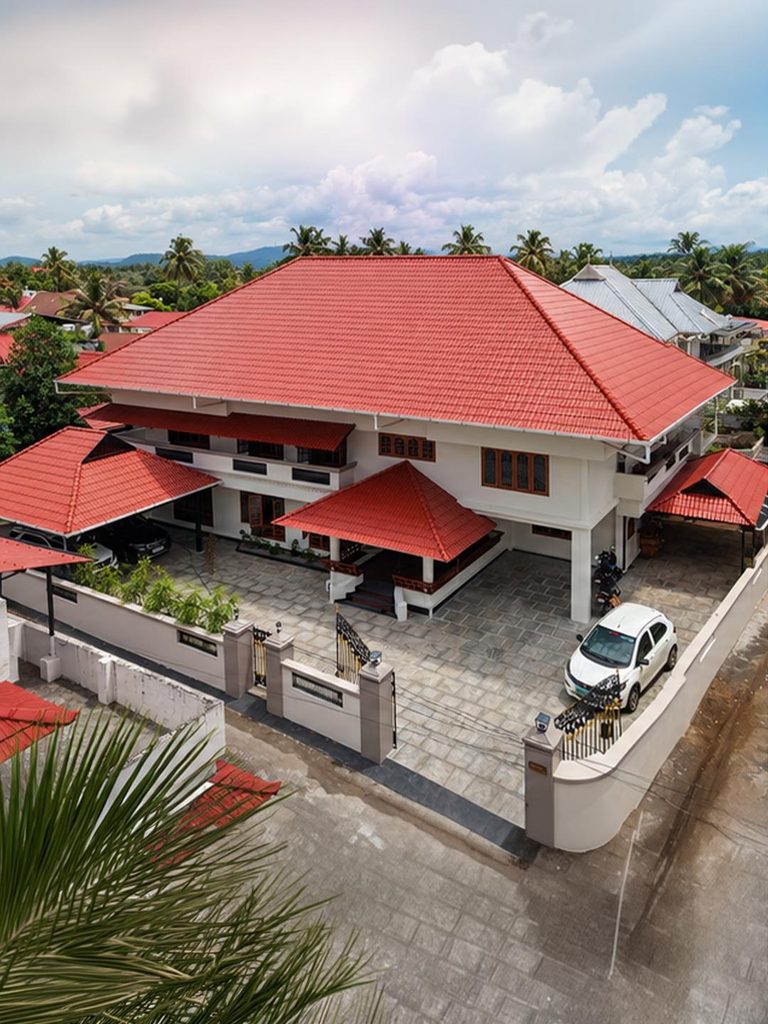
Roof tiles are widely used in Kerala, particularly on sloping roofs. Their overlapping arrangement helps direct rainwater down the roof when the tiles are correctly selected and installed.
However, the roof pitch, tile profile, overlap, ridge details and drainage arrangements all matter. Poor installation or damaged tiles can lead to water entering the roof.
The roof structure must also be designed to support the weight of the selected tiles.
Roofing shingles in Kerala
Shingles can be considered for certain sloping roofs, including some contemporary villas. However, the product must be suitable for the expected rainfall, humidity and wind conditions.
The roof deck, underlay, fixing method, valleys, edges and ridge details require careful attention. Water can enter through poorly detailed areas even when the roofing material itself is suitable.
Before choosing shingles, ask the supplier or installer about the product’s suitability for Kerala’s weather and the installation requirements.
What should homeowners consider?
Rather than choosing a material based only on its appearance, consider these points:
- How effectively the roof design drains heavy rainwater.
- Whether the product is suitable for the roof slope.
- The quality of the underlay and waterproofing details, where required.
- The strength and condition of the roof structure.
- The availability of suitable accessories and replacement materials.
- The experience of the installer with the selected roofing system.
A well-designed and properly installed roof is essential, regardless of the material you choose.
5. Which Option Is Better for a Modern Kerala Home?
Modern homes often feature clean lines, large windows and carefully planned exterior colours. The roof can become an important part of the overall design.
Roof tiles are available in different profiles and finishes, so homeowners can choose a look that complements both traditional and contemporary architecture.
Shingles also offer different colours and patterns, which can suit selected modern roof designs.
When comparing the two, think about the overall appearance you want to achieve.
For example, a home with a traditional sloping roof may suit a tile design that complements its architectural style. A contemporary villa with a complex roof shape may require a different roofing approach, depending on the design and product specifications.
Do not choose a roofing material based on photographs alone. Consider the actual product, roof dimensions, slope and installation requirements before finalising your choice.
6. Roof Tiles vs Shingles: What About Maintenance?
Maintenance is another important point to consider, particularly in Kerala’s humid and rainy conditions.
Maintaining roof tiles
Roof tiles should be inspected periodically for cracks, displacement and damage. The ridge, valleys, gutters and other roof junctions should also be checked.
If a tile is damaged, it may be possible to replace the individual tile without changing the entire roof covering. This depends on the roof design, product availability and the condition of the surrounding installation.
Avoid walking directly on roof tiles unless the appropriate safety precautions and access methods are used, as some tiles can crack under concentrated loads.
Maintaining roofing shingles
Shingle roofs also require regular inspection. Look for damaged or lifted shingles, loose edges, debris accumulation and signs of water entry.
The roof deck, flashing and waterproofing details should be checked when necessary. Any repair should follow the manufacturer’s guidance and be carried out by someone familiar with the roofing system.
Which requires less maintenance?
There is no fixed answer for every product. Maintenance depends on the roofing material, quality of installation, exposure to weather and the surrounding environment.
When comparing quotes, ask what inspections and maintenance are recommended by the manufacturer. This will help you understand the ongoing care required for each option.
7. Which Is More Affordable: Roof Shingles or Roof Tiles?
Cost is often one of the first questions homeowners ask when planning a new roof.
However, comparing only the price per square foot can give an incomplete picture. The final cost depends on several factors, including the product selected and the amount of preparation required.
For roof tiles, the cost may include:
- The price and quantity of tiles.
- Ridge tiles and other required accessories.
- Roof structure and support requirements.
- Labour and installation.
- Transport, wastage and finishing work.
For roofing shingles, the cost may include:
- The price and quantity of shingles.
- Roof decking and underlay, where required.
- Flashing, ridge and edge details.
- Labour and installation.
- Waterproofing and other system components.
A roofing option with a lower initial material cost may still require additional spending on roof preparation or other components.
The best way to compare prices is to obtain a detailed quote for both systems based on the same roof dimensions and design. Check what is included before making a decision.
8. What About Heat and Indoor Comfort?
The roof is one of the building elements that affects indoor comfort. However, choosing between tiles and shingles based only on the material name will not tell you how comfortable the house will be.
The indoor temperature can be influenced by several factors, including:
- The roofing material and its properties.
- Roof colour and surface finish.
- Ceiling construction and insulation.
- Ventilation below the roof.
- Roof orientation and exposure to sunlight.
- The design of the building and surrounding shade.
Research conducted in Kerala’s warm, humid climate has compared the thermal performance of different sloping roof coverings. The findings highlight the importance of considering the complete roof assembly rather than assuming that any one roof covering will automatically keep every house cool.
If indoor comfort is a priority, discuss ventilation and insulation options with your architect or roofing contractor before finalising the material.
9. Common Mistakes to Avoid When Choosing Roofing Materials
Homeowners can avoid many roofing problems by checking a few important details before installation.
Choosing only by appearance
A roof may look attractive in a photograph but may not be suitable for your roof slope or structure. Always check the product requirements.
Ignoring the installation system
Roof tiles and shingles use different installation methods. Make sure the contractor understands the selected product and follows the manufacturer’s instructions.
Comparing prices without checking what is included
One quotation may include accessories and roof preparation, while another may cover only the roofing material. Compare complete quotations before deciding.
Overlooking rainwater drainage
Gutters, valleys, ridge details and roof edges should be planned properly. Effective drainage is particularly important for houses in areas that receive heavy monsoon rain.
Not checking repair and replacement options
Ask whether replacement materials will be available if a tile or shingle becomes damaged. Also check the product warranty and maintenance guidance.
Taking time to review these details can help you avoid unnecessary problems after the roof is completed.
10. How to Choose the Right Roofing Material for Your Home
Before making your final decision, compare the products based on your home’s design, structure and long-term requirements.
Here is a simple checklist:
- Check the roof design: Confirm the slope, shape and dimensions with your architect or contractor.
- Confirm structural suitability: Make sure the roof structure can support the selected system.
- Compare the materials: Understand the differences between the exact tile or shingle products being considered.
- Review the installation requirements: Ask about underlay, waterproofing, fixing methods and accessories.
- Compare complete costs: Include materials, labour, roof preparation and finishing work.
- Ask about maintenance: Check the recommended inspection schedule, repair options and warranty conditions.
- Review the appearance: Compare actual samples and completed projects where possible.
If you are considering roof tiles for your home, explore the TAPCO roof tile collection to review the available roofing options.
You can also explore TAPCO stone-coated roofing solutions if you are considering that particular roofing category. Stone-coated metal roofing is different from conventional asphalt shingles, so compare the actual product specifications before deciding which system is suitable for your house.
Frequently Asked Questions
1. Are roof tiles better than shingles for Kerala homes?
Roof tiles can be suitable for many Kerala homes, particularly those with sloping roofs. Shingles can also work for selected designs when the product is suitable for the climate and installed correctly. The better choice depends on the roof structure, design, budget and installation requirements.
2. Can roofing shingles withstand Kerala’s heavy rain?
Some shingle systems can be used in rainy climates when they are designed for the conditions and installed according to the manufacturer’s instructions. Roof slope, underlay, flashing, edges and drainage are important. Check the specific product’s suitability before buying.
3. Are roof tiles suitable for modern villas?
Yes. Roof tiles are available in different colours, shapes and profiles that can complement modern villas as well as traditional homes. Choose a product that suits the roof design and structural requirements.
4. Which roofing option is cheaper?
The cost depends on the material, roof preparation, accessories, labour and installation requirements. Compare complete quotations for the same roof design rather than comparing material prices alone.
5. Do roof tiles require regular maintenance?
Roof tiles should be inspected periodically for cracks, displacement, damaged accessories and drainage issues. The frequency of maintenance depends on the product, installation quality and local conditions.
6. Are stone-coated metal roofing and asphalt shingles the same?
No. They are different roofing product categories. Stone-coated metal roofing uses a metal base with a stone-coated surface, while conventional asphalt shingles use an asphalt-based construction. Their installation requirements and performance characteristics can differ.
7. What should I check before installing a new roof?
Check the roof slope, structural support, product specifications, waterproofing details, drainage design, installation method, warranty and total cost. A qualified architect or roofing professional can help you select a suitable system.
Conclusion
Roof shingles and roof tiles can both be considered for residential roofing, but the right choice depends on your home’s design and practical requirements.
Roof tiles offer a range of traditional and modern designs, while shingles provide a different appearance and installation system. For a home in Kerala, it is important to consider heavy rainfall, roof slope, drainage, structural support, maintenance and overall cost before making a decision.
Do not choose a roofing material based only on its colour or initial price. Compare the actual products, understand their installation requirements and seek professional advice where necessary.
If you are planning a new home or renovating an existing roof, explore the TAPCO roof tile collection to review roofing options that may suit your house design.